
Tanger Free Zones : Start and Grow Your Business
Access the tax and logistics advantages of the Tanger Free Zones (TFZ, TAC, TMZ, SATT), with end-to-end support for your setup and ongoing compliance.
Essential Advantages
Tax Benefits
Corporate tax, professional tax, VAT and customs duty exemptions; corporate income tax that depends on the company’s situation. Full freedom to transfer foreign currency, tax-exempt dividends, and simplified administrative procedures.
A Supportive Environment
Reduced operating costs, optimized logistics, facilitated international access, modern infrastructure, trade agreements, and a globally recognized industrial cluster.
A Unique Industrial Hub
Strategic location, Tanger Med Port, vast industrial areas, thousands of companies, job creation, and a diversified, highly competitive industrial ecosystem.
The Main Free Zones in Tangier
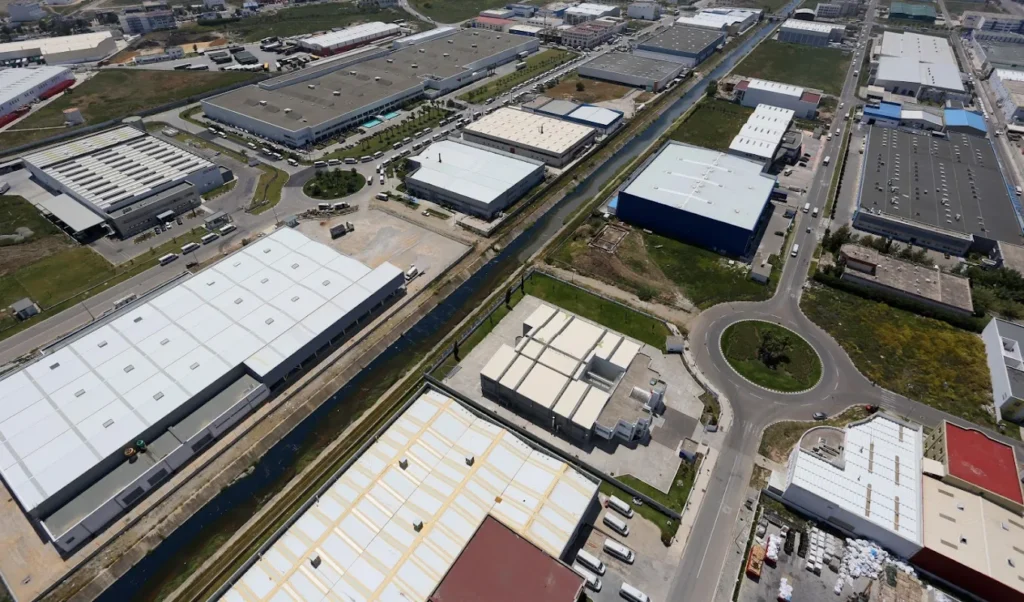
Ideal for export-oriented manufacturers, automotive suppliers, and B2B service providers.
- Specialization: Multisector (automotive, aerospace, electronics, textiles, logistics, and business services).
- Key strengths: Over 400 hectares, a pioneering zone since 1999, immediate proximity to Tangier city, and a high concentration of international companies (Yazaki, Lear, Delphi).
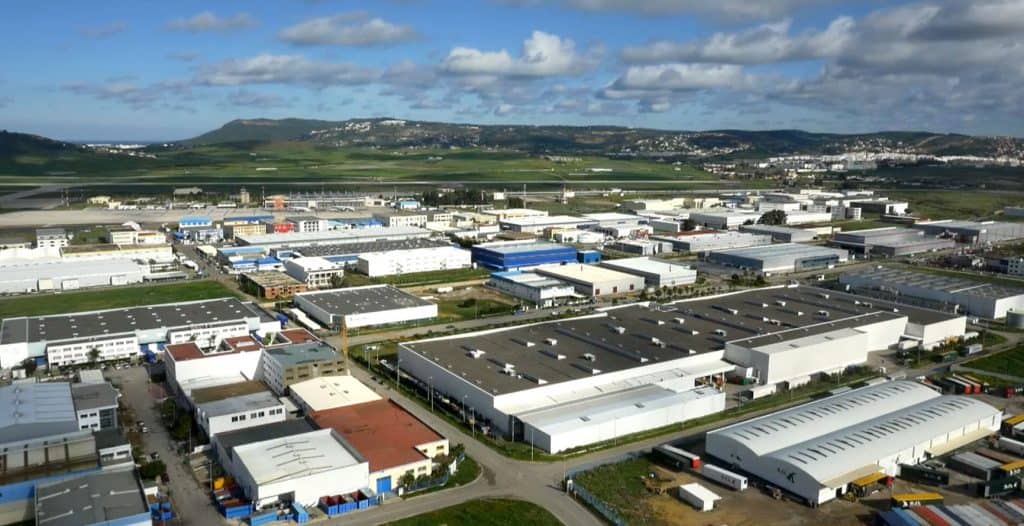
Ideal for manufacturers, subcontractors, and suppliers within the automotive value chain.
Specialization: Automotive and equipment suppliers.
Key strengths: Direct proximity to the Renault Mellousa plant, over 80 connected suppliers, and flexible land plots and warehouses.

Ideal for technology and innovation-driven industries seeking a sustainable ecosystem seamlessly connected to Tangier.
Specialization: Technology, automotive, electronics, and R&D.
Key strengths: Over 2,000 hectares, an integrated smart city, strong Sino-Moroccan partnerships, and close proximity to Tanger Med.
Benefit from tailored support to establish your business in the zone best suited to your activity.
Why Choose Tangier for Your International Expansion?
Tangible Tax Advantages for Investors
- Full corporate tax exemption for the first 5 years, followed by a stable tax treatment that depends on the company’s situation.
- Professional tax exemption for 15 years, covering buildings, land, and equipment.
- VAT exemption on goods and services traded within the free zones, with deduction rights maintained.
- Exemption from customs duties and import taxes, simplifying and reducing your commercial operations.
- Full freedom to transfer foreign currency and withholding tax exemption on dividends paid to non-residents.
An Environment That Maximizes Your Chances of Success
- Significantly reduced setup and export costs, thanks to tax exemptions and modern infrastructure.
- Faster go-to-market enabled by optimized logistics flows through Tanger Med Port, connected to more than 180 destinations.
- Direct access to European, American, and African markets, supported by multiple free-trade agreements.
- The strength of a globally recognized industrial cluster, with leading companies such as Yazaki, Lear, Delphi, Daher, and Militzer & Münch.
A Unique Industrial and Logistics Hub in Africa
- Strategic location: only 14 km from Europe, with direct access to European, African, and Mediterranean markets.
- Tanger Med Port: the leading port in Africa and the Mediterranean, connected to more than 180 ports across 70 countries.
- Scale & capacity: over 3,000 hectares of developed industrial zones, 1,400 established companies, and 130,000 jobs created.
- A diversified industrial ecosystem: automotive (Renault + 80 suppliers), aerospace, electronics, textiles, and logistics.
Find the Most Advantageous Location for Your Business
Frequently Asked Questions
Which activities are eligible in the Tangier Free Zones?
Activities must be primarily export-oriented: manufacturing (automotive, aerospace, textiles, electronics, logistics) and services linked to international trade.
Certain local, non-export activities are not permitted, except in specific cases provided for by regulation.
What are the conditions for the exemptions (duration, limits, sectors)?
- Corporate tax (CIT): full exemption for 5 years, followed by taxation at a corporate income tax rate that depends on the company’s situation.
- Professional tax: 15-year exemption.
- VAT and customs duties: exemptions apply to goods and services imported or used within export-oriented activities.
These benefits remain applicable as long as the company meets the free-zone establishment criteria and maintains its export-focused operations.
What is the difference between a free-zone company and an offshore company?
Free Zone (ZAI): a physical establishment (offices, factories, warehouses) carrying out industrial or logistical operations, regulated and supervised by the State.
Offshore company: a structure with no local industrial activity, often used solely for international invoicing. Since 2021, this regime has been gradually phased out in Morocco, whereas free zones remain fully operational.
Can a free-zone company sell on the local market?
Yes, but it is limited. Sales made on the Moroccan domestic market are treated as imports and are therefore subject to applicable customs duties, VAT, and taxes. The primary purpose of a free-zone company remains export.
What are the average setup timelines?
On average, the setup process takes between 2 and 6 weeks, provided the application file is complete.
This timeframe includes company incorporation, obtaining the required authorizations, and signing the lease or occupancy contract within the zone.
What are the reporting obligations and controls?
Companies are required to:
• Maintain accounting records in compliance with Moroccan standards.
• File an annual declaration (tax and statistical).
• Comply with social obligations (CNSS, payroll, insurance).
Tax and customs audits may be conducted to verify compliance with exemption conditions.
How are HR and payroll managed?
Companies recruit locally from a pool of qualified workers, often trained in specialized institutes. Payroll must comply with the Moroccan Labor Code, CNSS, and AMO requirements.
Some zones also offer training support and assistance in providing suitable talent for specific industry needs.
What is the corporate tax rate after the exemption period?
After the 5-year exemption period, corporate tax is applied at a corporate income tax rate that depends on the company’s situation, which remains significantly lower than the standard rate (31%).

